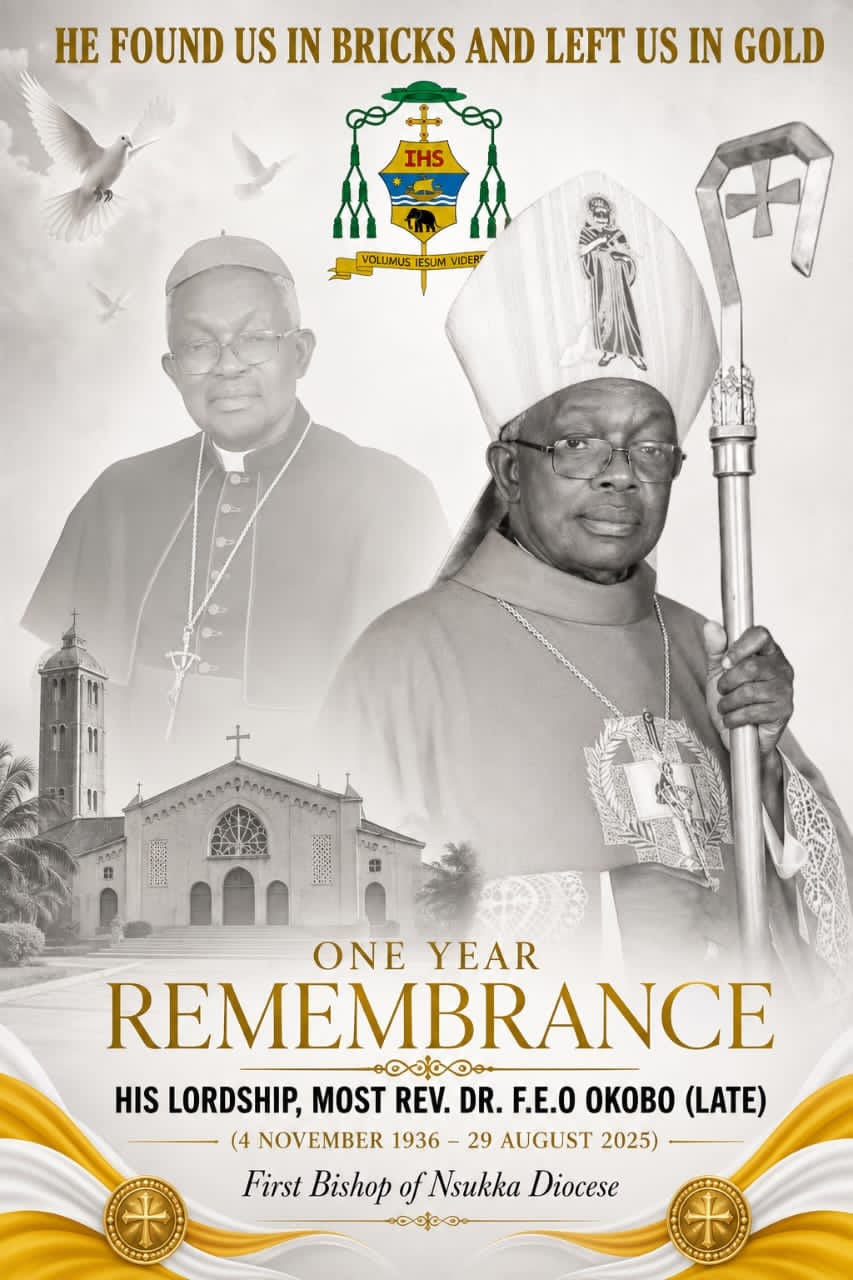
Exactly one year ago, in the early hours of 29 August 2025, at Niger Foundation Hospital, Enugu, the Diocese of Nsukka lost the man who gave it shape, structure and definition: His Lordship, the Most Rev. Dr. Francis O. Okobo, her pioneer Bishop.
But some men do not truly leave when they die. They remain in the institutions they built, in the structures they established, in the discipline they demanded, in the people they formed, and in the vision they bequeathed to generations. For Bishop Okobo, the story of his episcopacy was, in many ways, the story of a Diocese being born, organised, disciplined and propelled forward.
When he commenced his episcopal ministry in 1990, he chose as his episcopal watchword the stirring command: “Surgite eamus hinc” — “Arise, let us move from here.” And he did not merely carry those words on his episcopal coat of arms. He lived them.
With his crozier in hand, he led Nsukka from a place of spiritual penury towards a vibrant witness to the true freedom of the children of God; from fiscal underprivilege towards greater economic consciousness founded on due diligence, personal industry and responsible stewardship.
Under his pastoral leadership, the Diocese expanded dramatically, from 27 parishes to more than 140; from a Presbyterium of about 70 priests to more than 240 priests and religious; alongside about 200 seminarians, thousands of catechists and a Catholic population exceeding half a million. These were not merely statistics. They were evidence of a pastoral vision translated into institutions, structures and human formation.
As the pioneer Bishop, he understood that a Diocese could not be sustained by the clergy alone. He therefore gave serious attention to the organisation and formation of the laity. And so, the Laity Council was solidly structured at the various levels of ecclesial life; from the zones and outstation levels to the parish, deanery and diocesan levels.
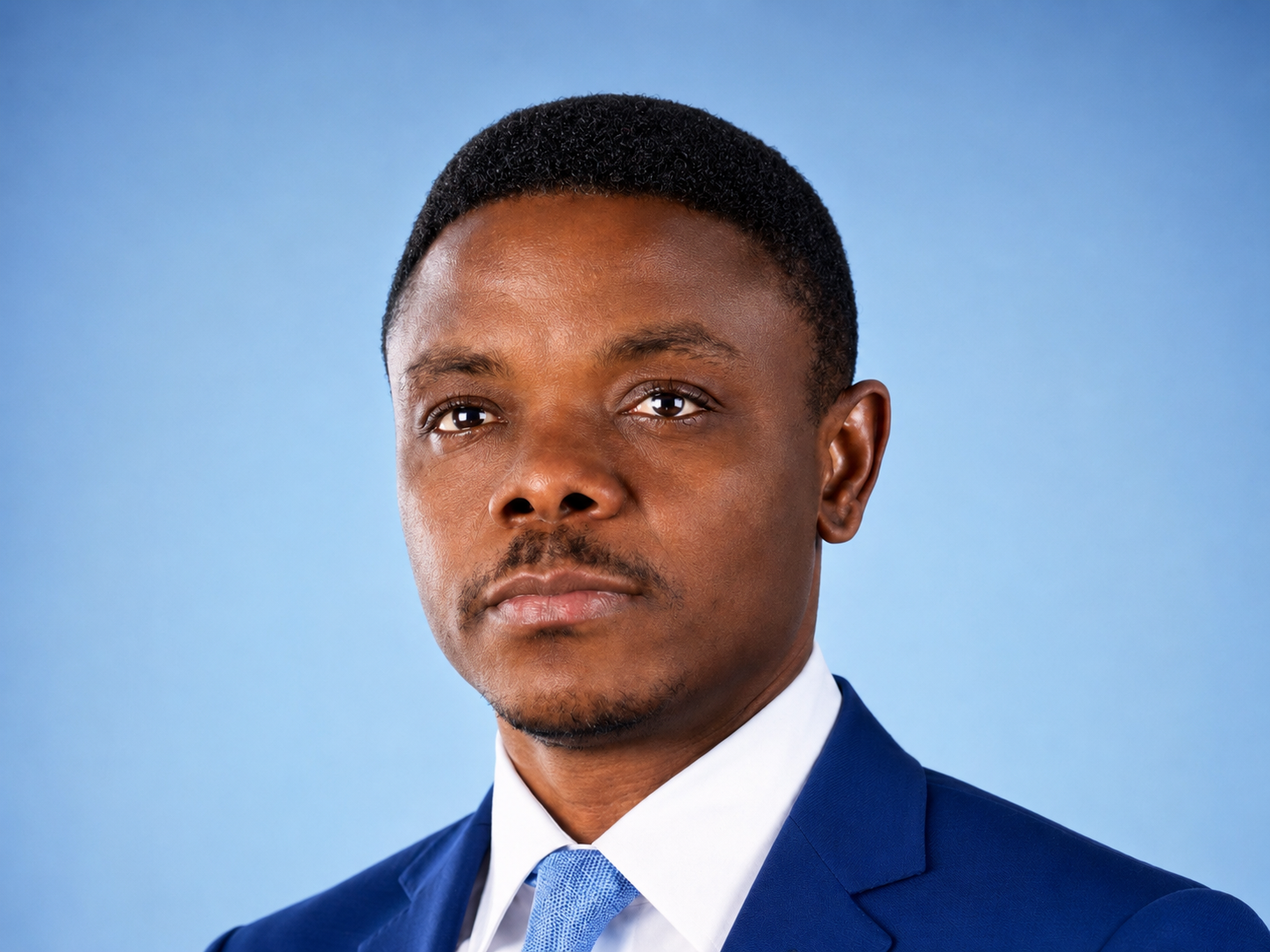
Jude Eze
(The Author)
At the foundation of this structure was the domestic church; the Ecclesia domestica: the Christian family as the first school of faith and ecclesial life.
This vision stemmed profoundly from the ecclesiology of the Second Vatican Council, particularly the Council’s teaching on the family and the apostolate of the laity in Lumen Gentium 11, Apostolicam Actuositatem 11 and Ad Gentes 15.
For him, the Church could not become strong at the diocesan level if she was weak at the family level. The parish could not be truly vibrant if its families were spiritually impoverished. And the Diocese could not become a living organism if its smallest ecclesial communities were neglected.
His approach was therefore, in many respects, from the microcosm to the macrocosm, from the family, to the local Christian community, to the outstation, parish, deanery and ultimately the Diocese.
He was equally uncompromising about the integrity of Catholic discipline. Enforcement was his forte. Any order he gave, he enforced to the letter. For instance, funeral rites, in his understanding, were not occasions for practices that contradicted or offended the Catholic faith. Catholic funerals had to remain recognisably Catholic. And through his priests, he enforced it.
Marriage was treated with the same seriousness. A Catholic who contracted marriage outside the Catholic Church without the required canonical form placed himself or herself outside full sacramental communion. Same fate applies to the parents of the couples, who were seen as accomplices to such tepidity in relapse of faith. Okobo enforced the discipline of the Church with firmness.
But one paradox remains in Okobo’s episcopacy: he was resolute in discipline, yet meek in leadership; firm in principle, yet pastoral in disposition.
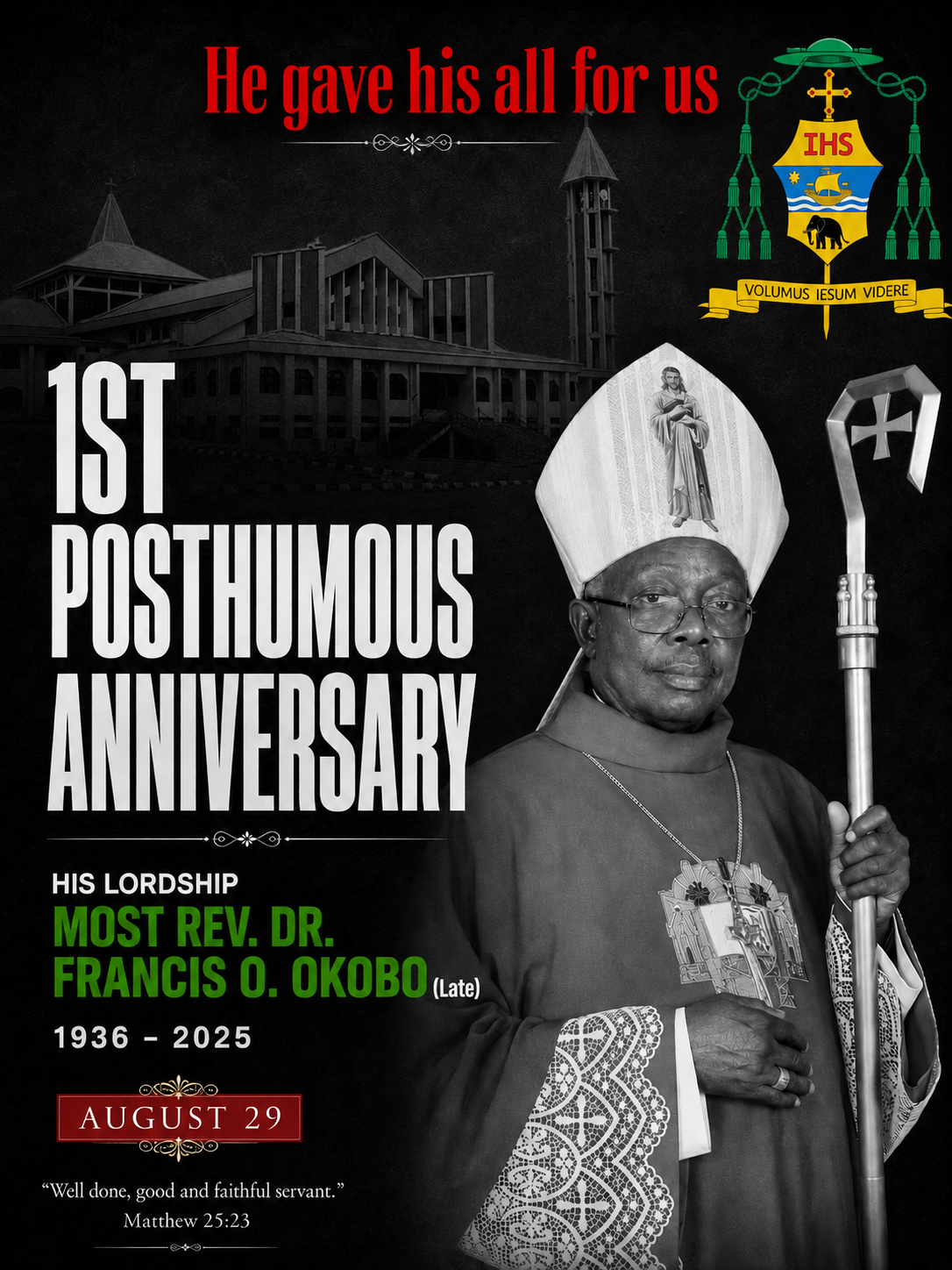
He could wield the proverbial iron fist when the integrity of the Church demanded it, but that firmness was not simply an exercise of authority. It was rooted in his conviction that the Church needed order if she was to fulfil her mission, anywhere in the world, and Nsukka cannot be an exception.
He inherited a young Diocese and set about giving it a durable ecclesial architecture.
He did not merely administer Nsukka Diocese.
He built it.
He gave it structure.
He gave it discipline.
He gave it a culture of responsibility.
He gave its laity an organised voice.
He expanded its pastoral reach.
He nurtured its clergy and vocations.
And, above all, he gave the Diocese a sense of what it could become.
Today, exactly one year after his death, we remember not merely the Bishop who departed on 29 August 2025, but the builder whose footprints remain visible across the Diocese he served.
The buildings may age. The structures may evolve. The generations may change. But the ecclesial foundation laid by this great pioneer does not disappear easily.
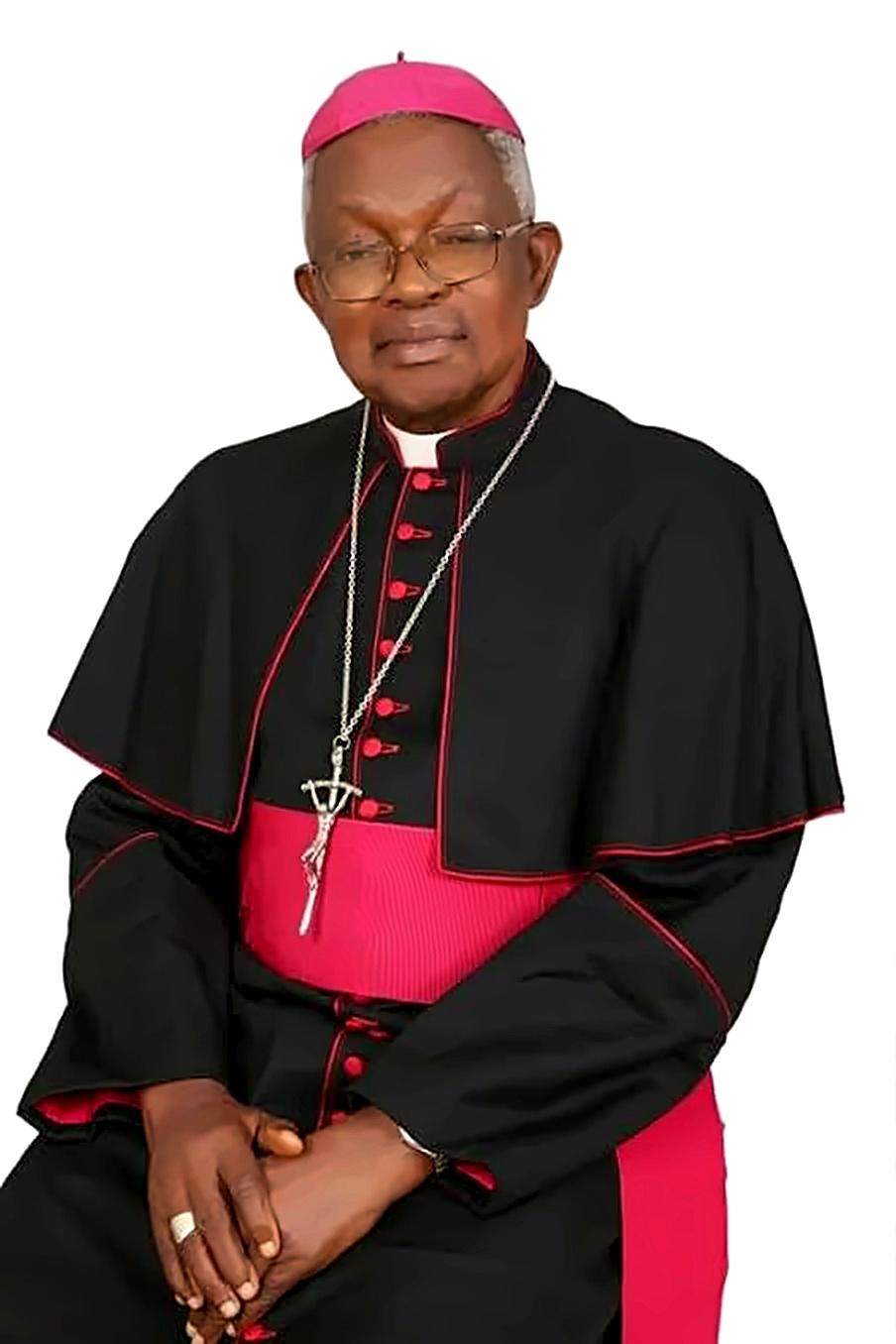
May the soul of His Lordship, Most Rev. Dr. Francis O. Okobo, pioneer Bishop of the Diocese of Nsukka, rest in the peace of Christ.
May Nsukka continue to arise and move forward, and may daylight spare us!
Arise, let us move from here…!
✍️Jude Eze.