
At about 7:30 p.m. on Friday, February 27, 2026, I dialed the number of my boss, the Chairman of Udenu Local Government Council, Aka Eze Aka.
The phone rang twice.
“Hello Jude, good evening Sir,” he said immediately he picked up.
That is his way. Whether you are older or younger, man or woman, he adds “Sir” or “Ma” to your name. It is not politics. It is not performance. It is simply who he is.
After brief pleasantries, I went straight to the reason for my call.
Earlier that day, the Chairman had released what I considered an overly ambitious itinerary: commissioning six solar-powered boreholes across six political wards, Obollo Eke, Orba Ward I, Orba Ward II, Ezimo, Imilike, and Udunedem, all in one day. The remaining four wards, he had assured, would follow within months.
But the timetable? Tight. Almost breathless.
“Sir,” I began cautiously, “this schedule is unrealistic. You cannot commission a project at Obollo Eke by 10:00 a.m. and be in Orba Ward I by 10:30 a.m. for a similar event. Then move to Orba Ward II, Ezimo, Imilike and Udunedem in quick succession. I would suggest we re-adjust the timing; perhaps one hour per site, to allow speeches, goodwill messages, vote of thanks…”
He listened patiently.
Then he responded in a tone that was calm but firm.
“Alright, Jude. I understand your observation,” he said. “But you must note something very important. These essential amenities are not privileges to our people. They are their rights. And they are our obligation.”
He paused briefly.
“I do not want elaborate ceremonies where we wait to receive eulogies. We did not do anyone a favour by providing water. We simply fulfilled our oath.”
Then he asked quietly: “Do you understand?”
“Yes, Sir,” I replied.
We exchanged goodnights. He reminded me to be punctual.
The call ended.
But something had shifted inside me.
As I dropped the phone, my heart melted in awe. I had long admired his prudent management of public funds and his uncommon administrative discipline. But that night, my respect for him skyrocketed.
Here was a leader who saw development not as a platform for applause, but as a duty discharged.
As the American statesman John F. Kennedy once said, “Leadership and learning are indispensable to each other.” That evening, I learned a deeper lesson about leadership.
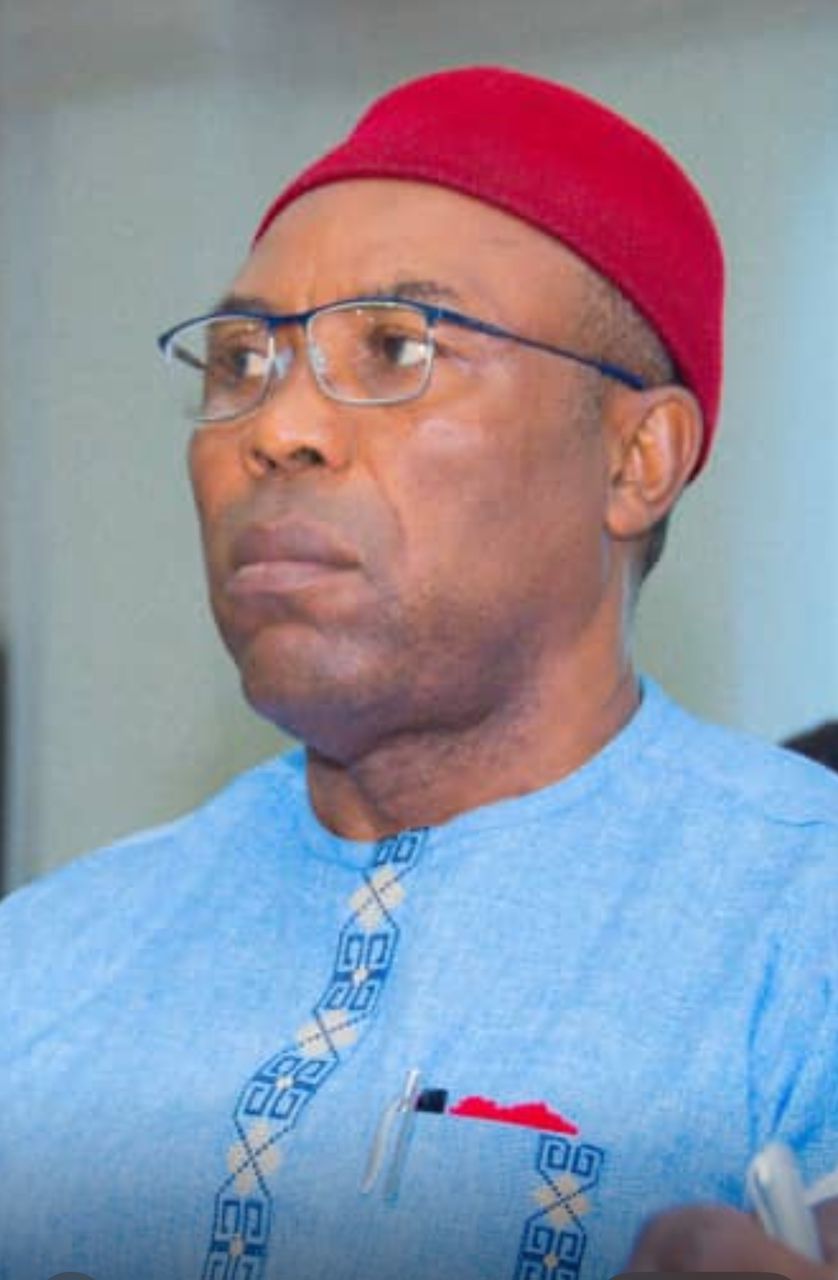
Aka Eze Aka,
Chairman, Udenu Local Government Council
In December last year, the Chairman commissioned the Obollo Ag’ Ag’ Roundabout, a landmark infrastructural project, without ceremony, banners, photo sessions, or long speeches. No red carpets. No elaborate protocols.
Many wondered why such a visible achievement passed quietly.
Now I understood.
For him, projects are not festivals. They are responsibilities.
He is not allergic to appreciation; he is allergic to unnecessary extravagance.
“Public office,” former American President Harry Truman once noted, “is a public trust.” And in Udenu, that trust is being interpreted with refreshing simplicity.
The next morning, the D-day, I arrived early at his residence for final instructions. True to character, there were no decorative arrangements. No elaborate logistics. No flamboyance.
In fact, I personally dashed to purchase ribbons and scissors. Those were not even part of his original plan. Ceremony, in his books, is optional. Service is not.
But leadership is often a dialogue between intention and perception. So, unknown to him, the host communities had their own script.
They were not going to allow history pass like an ordinary weekday.
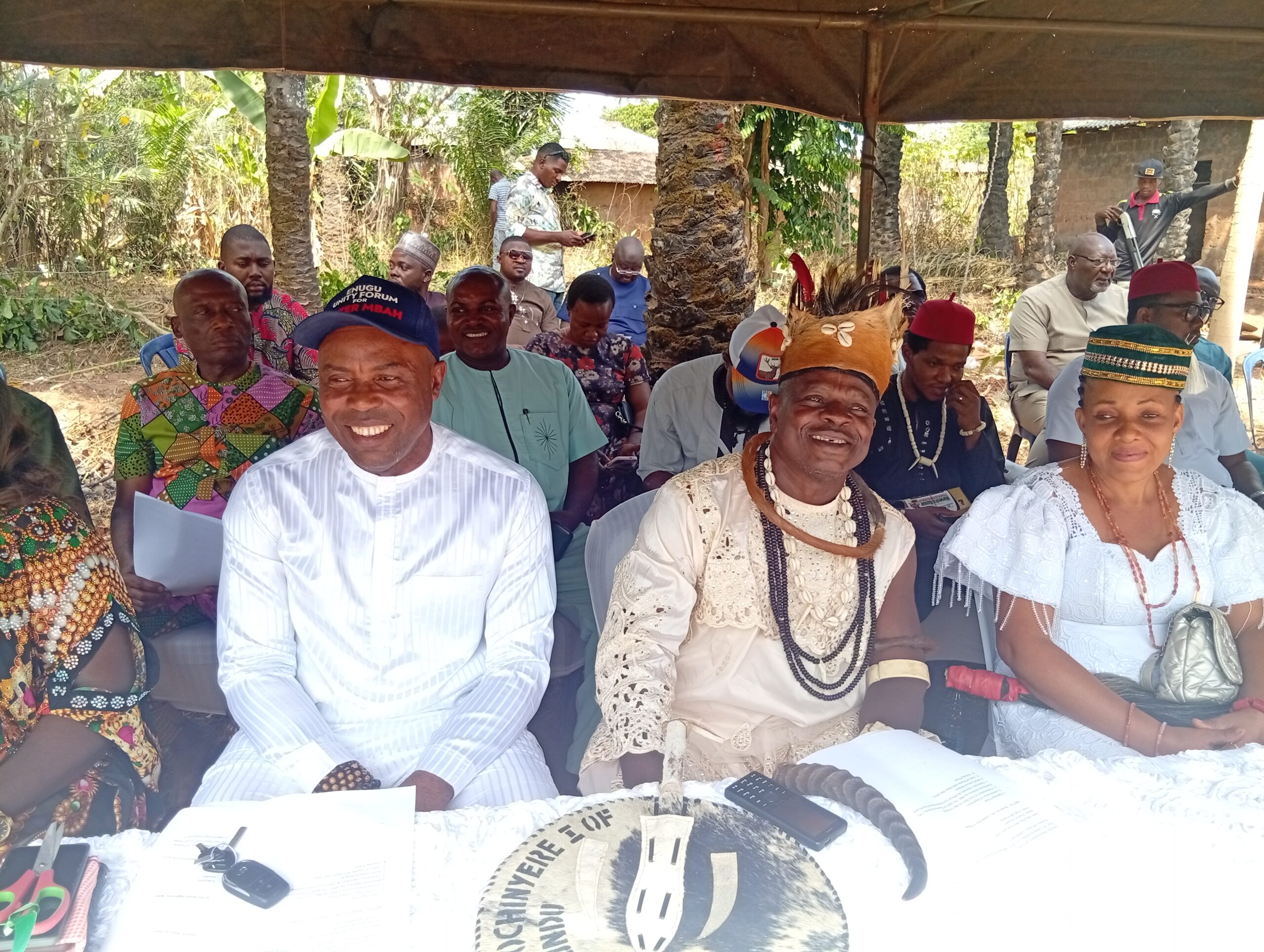
The reception at Ifuama Umundu
At Obollo Eke, the people were waiting.
At Orba Ward I and II, huge crowds had gathered in numbers.
Ezimo, Imilike, Udunedem, each community had mobilised. Word had spread: something unprecedented was happening. It was record-setting grassroots delivery. And the people responded the only way they knew how: with gratitude.
At every stop, what was meant to be a brief technical commissioning turned into a mini-reception.
Cultural troupes danced.
Women ululated.
Children sang.
Elders raised prayers.
Traditional rulers extended royal courtesies in their palaces.
Gifts were presented; not as political gestures, but as heartfelt appreciation.
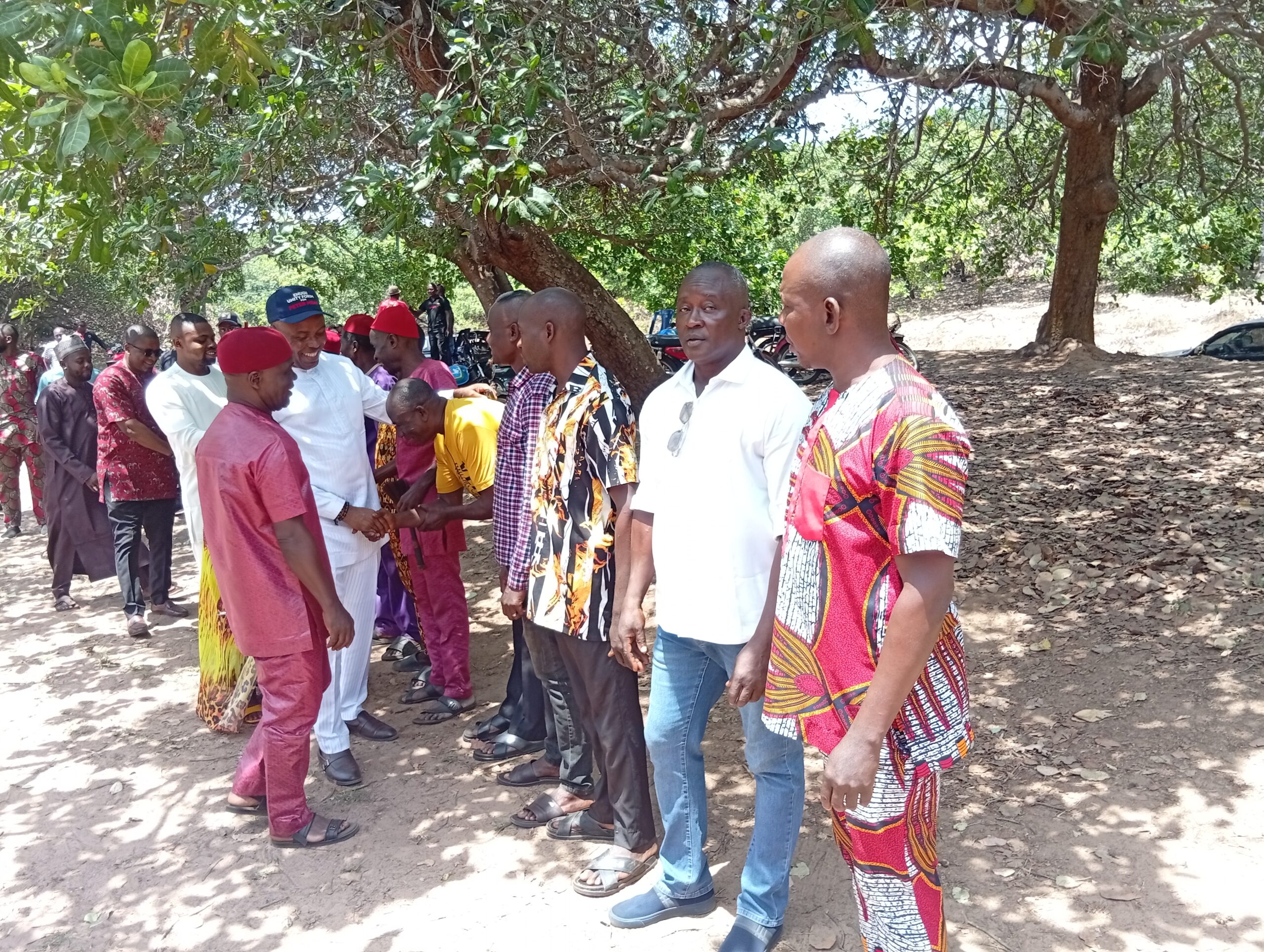
Aka Eze Aka being received by Ezimo Leaders and stakeholders on arrival
Perhaps the most colourful reception unfolded at Ifuama Community in Umundu, Udunedem Ward.
Gun cannon salutes echoed.
The sky was metaphorically “rented,” as celebratory fireworks cracked above.
The atmosphere reverberated with joy. Women and children sang songs of thanksgiving. The elderly poured libations, invoking ancestral blessings upon the Chairman and his team. It was a spontaneous festival of gratitude.
Ironically, the man who sought to avoid eulogies found himself enveloped in them.
As former British Prime Minister Margaret Thatcher once observed, “Power is like being a lady… if you have to tell people you are, you aren’t.”
True leadership does not announce itself. It manifests in impact.
The commissioning of six solar-powered boreholes in one day may sound like an administrative feat. But beyond statistics lies something deeper: a philosophy.
A belief that essential amenities, clean water, roads, health facilities, are not political gifts. They are rights.
And when leaders begin to see public projects not as personal achievements but as contractual obligations, the tone of governance changes.
Sometimes the more a leader avoids applause, the louder the applause becomes.
The Chairman’s plan was simple: arrive, inspect, commission, depart.
The people’s plan was different: celebrate, honour, appreciate.
In the end, both visions merged. The projects were commissioned efficiently.
The schedule, though tight, was kept. And the communities expressed their gratitude in culturally rich, dignified ways.
The “unrealistic itinerary” I had worried about became symbolic of something larger, a determination to maximize time, reduce ceremony, and prioritise delivery.
Leadership does not always need a microphone.
Impact does not always need a spotlight.
Sometimes, the most powerful statements are made quietly — in punctual arrivals, modest ceremonies, and fulfilled promises.
“We did not do them a favour. We fulfilled our oath.”
Perhaps that single sentence captures the essence of public service better than any speech could.
May daylight spare us!
✍️Jude Eze.