Beyond the viral Vatican Bank controversy lies a deeper pastoral message of courage, hope and perseverance for Nigerians living abroad.
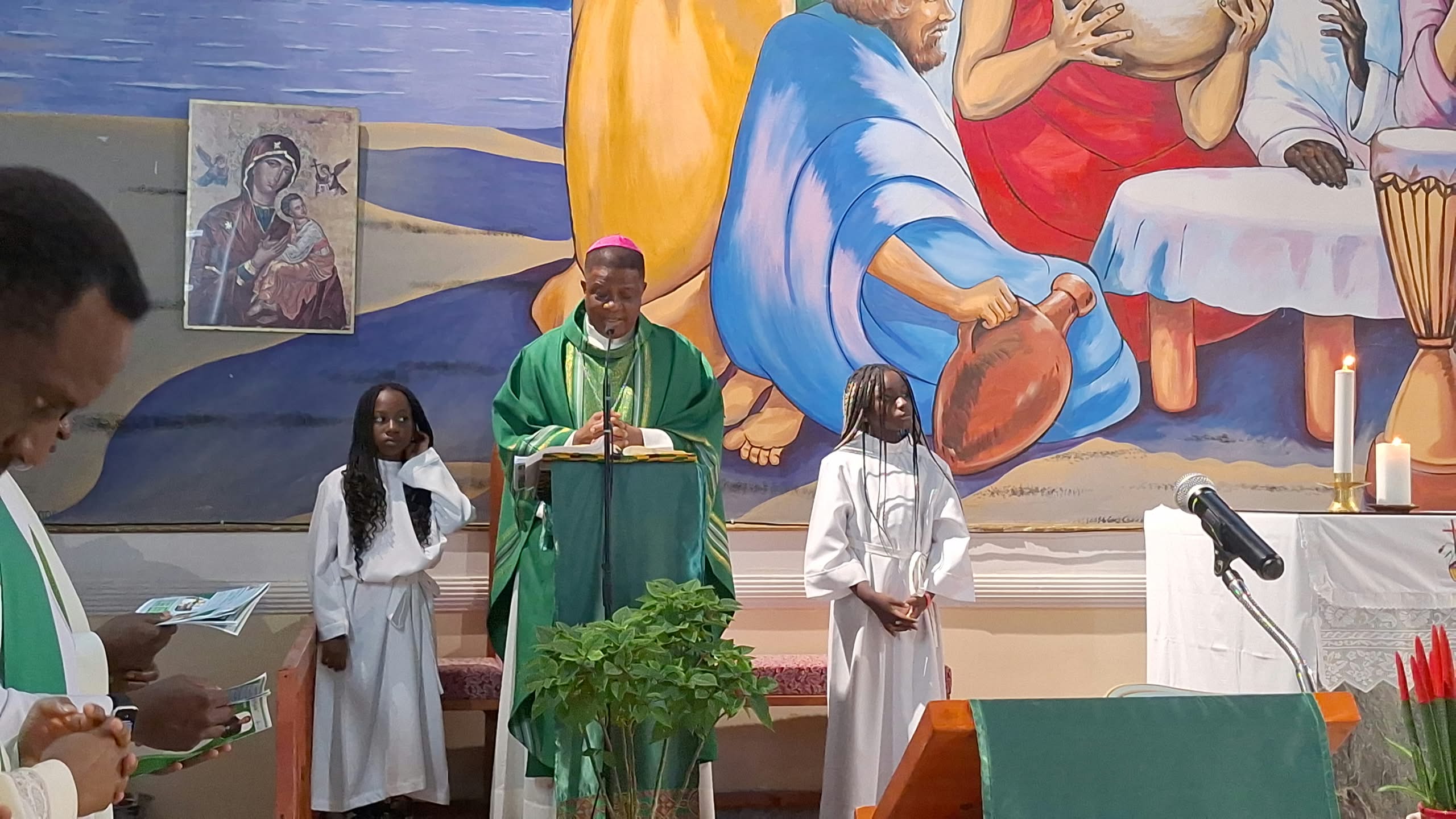
“Insist. Don’t give up.” This was Bishop Godfrey Igwebuike Onah’s central message to Nigerians abroad. He delivered the homily on 8 October 2026, at Santa Maria dell’Aiuto Parish, Capua, Italy. His appeal was for courage and perseverance amid difficulties, prejudice and disappointment. Yet, a brief personal experience at the Vatican Bank dominated social media headlines. An illustration became a controversy, while the message was overshadowed. This raises a troubling question: Are we reporting what truly matters, or merely what attracts attention?
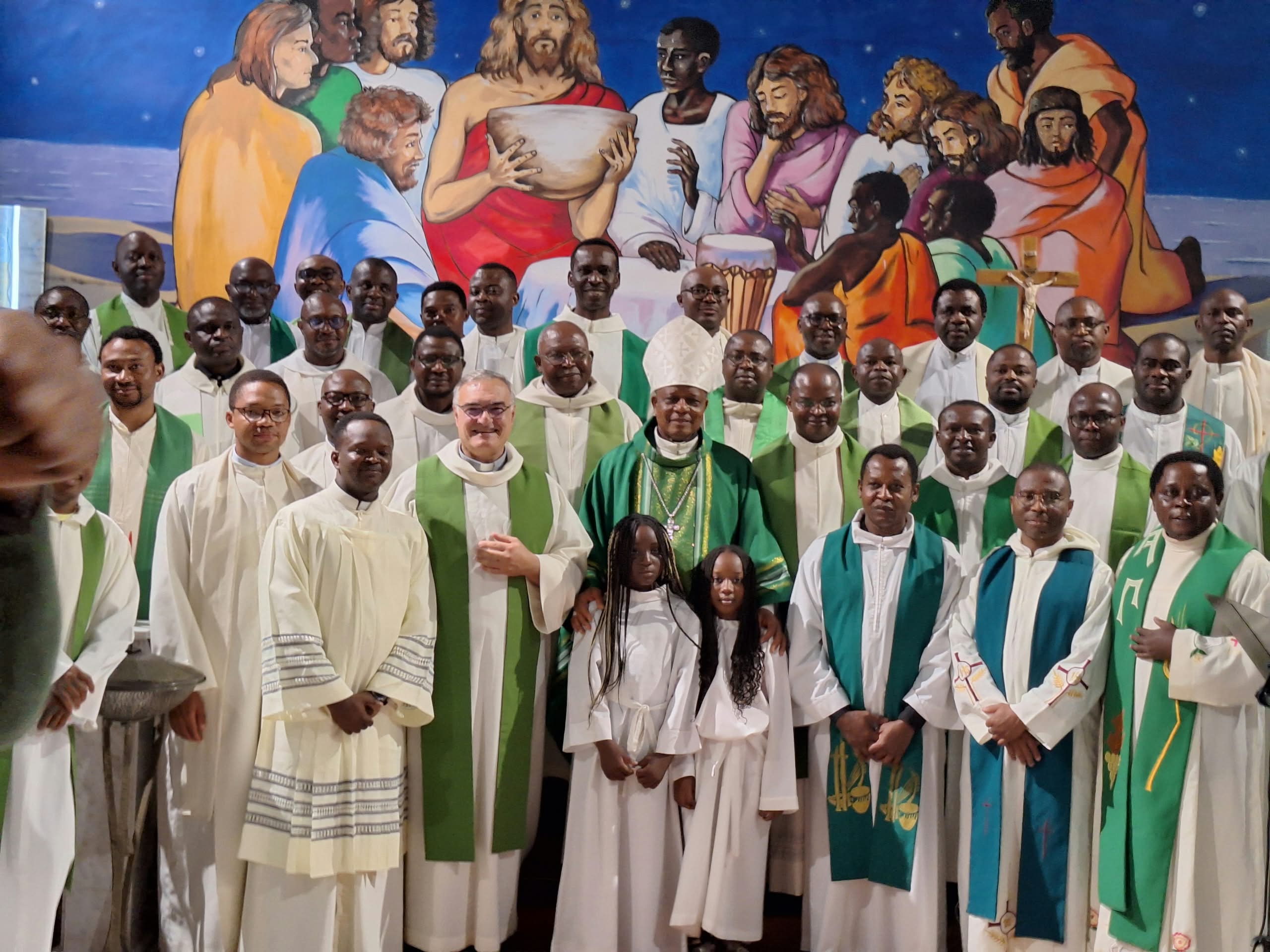
The homily was delivered during the biennial reunion of Nsukka Diocesan priests studying and working in Europe, hosted at the parish where Rev. Fr. Paulinus Ezema carries out his pastoral ministry. The gathering, which also brought together members of the Nigerian Catholic community, was an occasion of priestly fraternity, ecclesial communion and pastoral encouragement.
Addressing the experiences of Nigerians living outside their homeland, Bishop Onah encouraged them to remain courageous, responsible and hopeful despite the difficulties they may encounter because of their nationality.
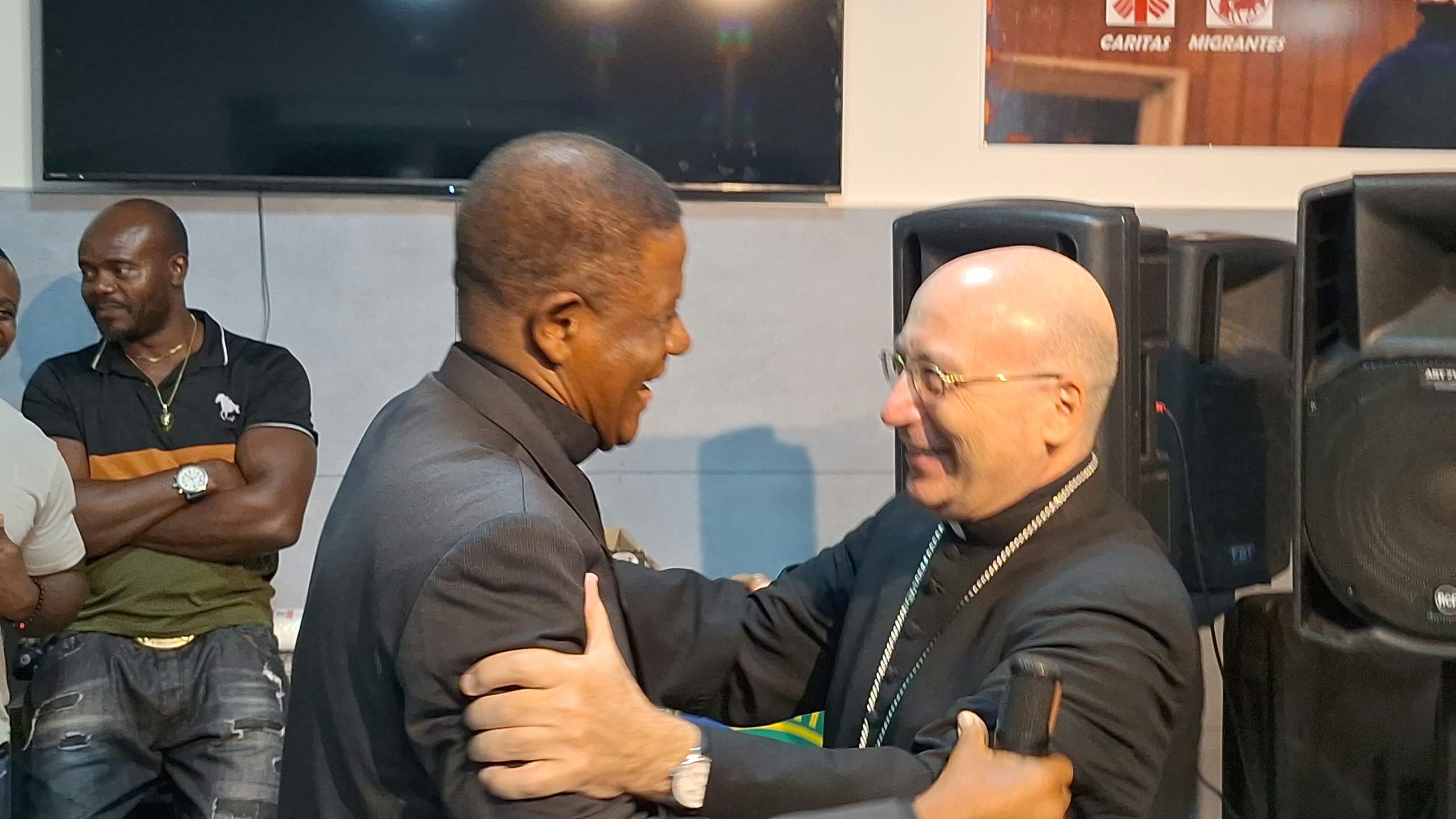
To illustrate his message, the Bishop recounted a recent experience at the Vatican Bank, where he had gone to withdraw money from his account.
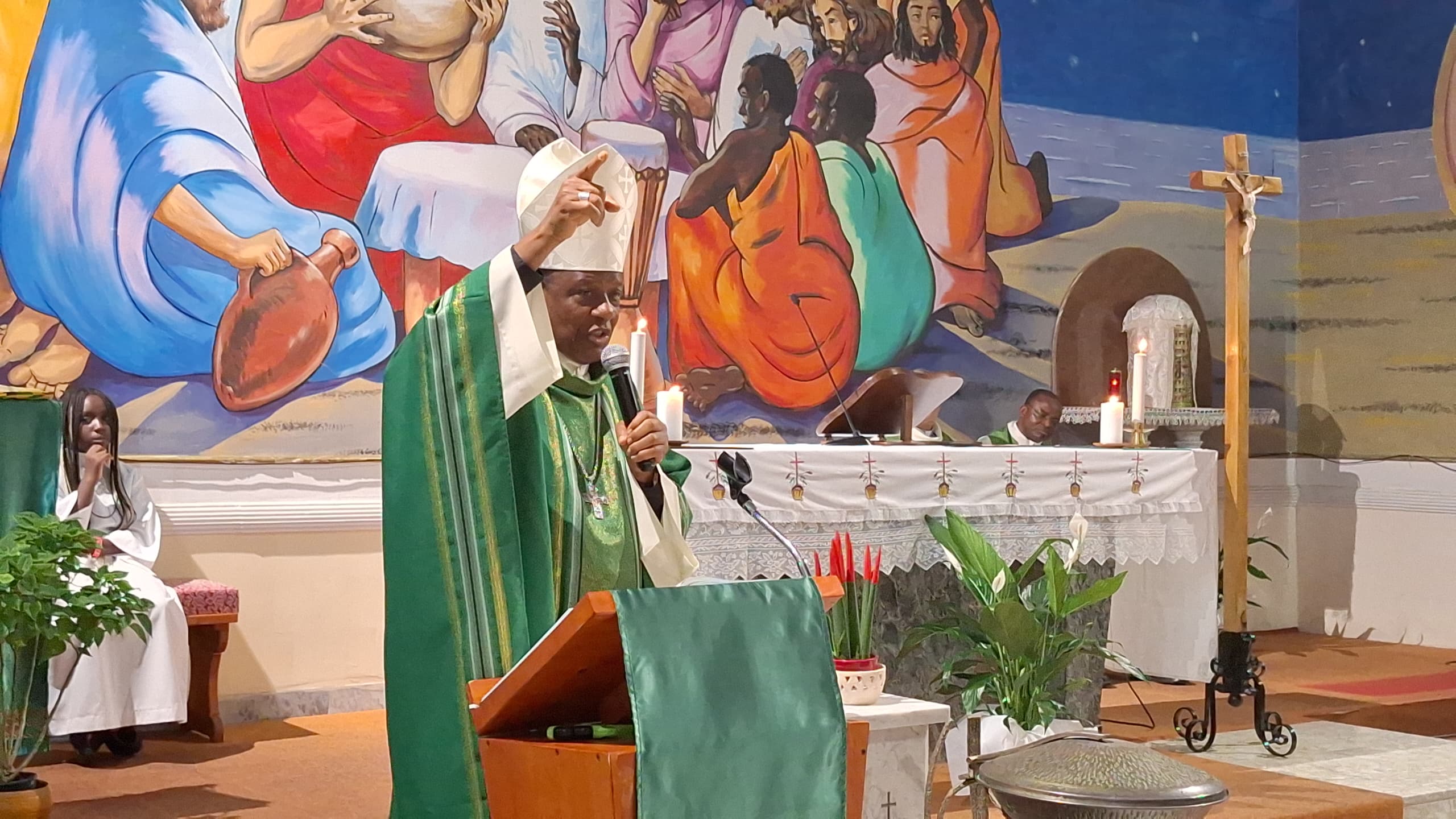
Most Rev. Prof. Godfrey Onah
According to the Bishop, he was informed that he needed authorisation from the Secretariat because the amount he wished to withdraw exceeded the applicable limit.
When a priest accompanying him asked whether the restriction applied to everyone or specifically to bishops, the response, as narrated by Bishop Onah, was: “Dipende da dove è nato” — “It depends on where you were born.”
For the Bishop, the experience illustrated how one’s country of birth could sometimes become a source of unexpected difficulties, regardless of social standing or ecclesiastical responsibility.
Yet his central message was neither bitterness nor resignation.
“Insist. Don’t give up.”
When the Illustration Overshadows the Message
As excerpts of the homily circulated online, attention increasingly shifted towards the Vatican Bank incident, leaving the wider pastoral message in the background.
The incident itself is newsworthy. Questions about financial restrictions, nationality and equitable treatment deserve legitimate journalistic investigation.
However, responsible reporting requires distinguishing what a speaker says from the broader meaning the speaker intends to communicate.
Bishop Onah did not present his experience merely as a banking controversy. He used it to encourage Nigerians who confront rejection, prejudice and disappointment abroad.
The bank was the illustration; perseverance was the proclamation.
Was Bishop Onah Racially Discriminated Against?
One particularly troubling dimension of the online reactions is the suggestion that Bishop Onah was subjected to racial discrimination at the Vatican Bank.
Such a conclusion goes beyond what the available account establishes.
The reported expression, “Dipende da dove è nato,” refers to a person’s place of birth. It does not, in itself, establish racial discrimination.
There is an important distinction between race, nationality and the regulatory requirements that financial institutions may apply to customers from different countries.
Financial institutions may impose additional verification or authorisation requirements based on country-related risk assessments and other regulatory obligations. Whether such considerations explain this particular incident, however, remains unverified.
Consequently, neither racial discrimination nor an unlawful nationality-based restriction can responsibly be presented as an established fact without further evidence.
Indeed, the Bishop’s own narration was not presented as a formal allegation of racial discrimination. It was a personal experience used to illustrate how discouraging certain encounters abroad can be.
To transform that illustration into a categorical accusation of racism is to introduce a conclusion that the reported facts do not sufficiently support.
This distinction does not minimise the Bishop’s experience. Rather, it protects the integrity of his testimony from interpretations that may go beyond what he actually communicated.
When Journalism Loses Context
The controversy equally challenges contemporary media practice.
A homily is a coherent proclamation in which personal experiences, theological reflections and practical illustrations serve a central pastoral purpose.
Extracting one illustration without adequately presenting that purpose can create an incomplete or misleading impression, even when the words reproduced are authentic.
More troubling still is the tendency to introduce conclusions that the original statement did not establish. A question about a banking restriction can quickly become an accusation of racial discrimination, not necessarily because new evidence has emerged, but because the interpretation is more emotionally compelling.
The responsibility of Christian journalism is not to shield religious leaders from scrutiny, but to ensure that scrutiny remains accurate, fair and properly contextualised.
The Bishop’s account may warrant further investigation, but the precise nature and application of the bank’s withdrawal regulations cannot be established solely from the homily.

Rev. Fr. Teclus Ugwueze
(The Author)
Journalism serves truth not merely by repeating words, but by preserving their context and refusing to turn assumptions into facts.
Beyond the Headlines: What Bishop Onah Wanted Nigerians to Hear
The enduring significance of the Bishop’s homily lies in its pastoral response to discouragement.
Speaking within a joyful reunion that celebrated priestly fraternity, cultural exchange and the universal mission of the Church, Bishop Onah reminded his listeners that difficulties should never destroy their courage or sense of purpose.
He acknowledged a challenge he had personally encountered and invited Nigerians abroad not to allow similar experiences to determine their future.
His account deserves to be understood accurately, not sensationalised through unsupported allegations of racism or detached from the message it was intended to illuminate.
The Vatican Bank incident may warrant further examination. But it should not eclipse the principal lesson of his homily.
They reported the bank; he preached perseverance.
And beyond the controversy, his exhortation remains:
Wherever life takes you, whatever obstacles confront you, and however discouraging the circumstances become — insist, persevere and don’t give up.
About the Author:
Rev. Fr. Teclus Ikechukwu Ugwueze is a Catholic priest of Nsukka Diocese, a media missionary and communication scholar in Rome, creatively advancing the Gospel through Shepherd Communications, and youth apostolate platforms in dialogue with faith, culture, technology and society.